
Short-term rentals have transformed the way people travel. They offer flexibility, local charm, and often more space than hotels. But alongside the benefits, complaints about short-term rentals have grown in many cities around the world. Understanding these complaints helps hosts, guests, neighbors, and local governments create better experiences for everyone.
Short-term rentals sit in a unique space between residential housing and commercial hospitality. This mix can sometimes lead to tension, especially in busy urban neighborhoods. Most complaints fall into a few common categories.
- Noise and Party Issues
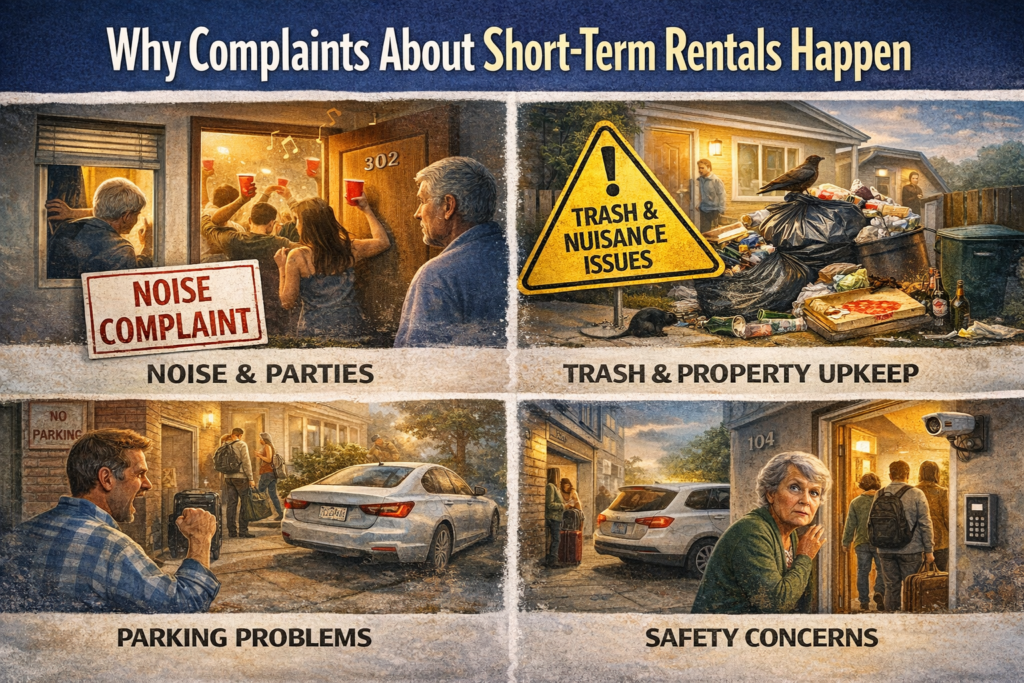
One of the most frequent complaints involves excessive noise. Guests on vacation may treat a rental like a party spot, especially on weekends or holidays. Loud music, late-night gatherings, and large groups can disturb neighbors who expect a quiet residential environment.
Lesson:
Clear house rules, occupancy limits, and quiet hours are essential. Many successful hosts use noise-monitoring devices (that don’t record conversations) and require guests to agree to strict no-party policies.
- Trash and Property Upkeep
Improper trash disposal is another major concern. Overflowing bins, garbage left on sidewalks, or missed collection days can quickly create friction with neighbors and even attract pests.
Lesson:
Hosts should provide simple, visible instructions for waste sorting and pickup schedules. Regular cleaning and property checks also prevent small issues from becoming neighborhood problems.
- Parking Problems
In dense cities, parking is already limited. When multiple guests bring cars into residential neighborhoods, they may block driveways, use restricted spaces, or ignore permit rules.
Lesson:
Hosts should clearly communicate parking rules before check-in and encourage public transportation or rideshare options where possible.
- Safety and Security Concerns
Neighbors sometimes worry about a constant stream of unfamiliar people entering and leaving the building. In apartments or shared complexes, this can raise concerns about building security.
Lesson:
Secure entry systems, proper guest verification, and communication with building management or homeowners’ associations can reduce these fears.
- Housing Availability and Rising Costs
In some cities, residents argue that too many homes are being converted into short-term rentals, reducing long-term housing supply and driving up rents. This concern often fuels calls for stricter regulation.
Lesson:
Responsible hosting means following local laws on registration, rental limits, and primary residence requirements. Cities that balance tourism with housing protection tend to see fewer conflicts.
- Misleading Listings and Guest Complaints
Complaints don’t only come from neighbors—guests also raise issues. These include inaccurate photos, missing amenities, poor cleanliness, or unresponsive hosts.
Lesson:
Honest listings, updated photos, and fast communication build trust and reduce disputes. Professional cleaning and maintenance are worth the investment.
The Role of Local Regulations
Many cities have introduced rules to manage short-term rentals, such as:
- Permit or registration requirements
- Limits on the number of rental days per year
- Restrictions in certain neighborhoods or building types
- Fines for noise or nuisance violations
When hosts ignore these rules, complaints increase and enforcement becomes stricter, affecting even responsible operators.
Creating a Better Short-Term Rental Experience
Short-term rentals can coexist with residential communities when managed thoughtfully. The key is responsibility on all sides:
- Hosts must set clear rules, maintain properties, and respect neighbors.
- Guests should remember they are staying in someone’s community, not an isolated resort.
- Cities should create fair regulations that protect housing while allowing tourism to thrive.
Complaints about short-term rentals usually come down to respect—respect for neighbors, for local laws, and for guest expectations. When everyone treats short-term rentals as part of a shared community rather than a loophole or party venue, the benefits of this travel model can outweigh the challenges.
Leave a Reply